Licensed & Insured · 24/7 Emergency Plumber · Serving Lakewood & SE LA Call (855) 575-2890

SE LA’s Post-WWII Plumbing Experts

Plumbing Services in Lakewood, CA | 24/7 Emergency Plumber

Licensed plumbing for Lakewood’s 1950s mass-tract homes and the surrounding SE LA Gateway Cities. We understand what the Lakewood Park Corporation built and how those materials age. Free estimates and upfront pricing.

  • Licensed & Insured
  • Free Estimates
  • Upfront Pricing
  • 24/7 Emergency Service

Lakewood’s Post-WWII Homes Deserve a Plumber Who Knows Them

Lakewood was built faster than any community in American history. Between 1950 and 1953, the Lakewood Park Corporation completed 17,500 homes on 3,500 acres of former farmland — a new house roughly every seven and a half minutes at peak production. Those homes now carry 70-plus years of wear in their pipes, drains, and foundations. Galvanized supply lines from the early 1950s builds are corroding and failing at fittings. Early-era copper from the late 1950s and 1960s is showing widespread pinhole failures. Original cast iron drain stacks are past their expected service life and producing slow drains and backups across the city’s residential stock.

Lakewood Plumbing Pros focuses specifically on the SE LA residential market centered on Lakewood and the surrounding Gateway Cities. Our service area covers the same territory that defined post-WWII American suburban development: slab-on-grade homes, mass-produced street grids from Lakewood Boulevard to Del Amo Boulevard, and working-middle-class owner-occupied properties with complicated plumbing histories spanning more than seven decades. We diagnose what is actually in your home, not a generic version of what a plumber assumes is standard in new construction.

Plumbing Services for Lakewood and the SE LA Gateway Cities

From the original 1950s construction on Clark Avenue and Faculty Avenue to ADU additions and remodel projects across the city, Lakewood’s plumbing needs cover a wide range. These are the services we provide across the mass-tract housing stock.

24/7 Emergency Plumber

Burst galvanized supply line. Active slab leak. Backed-up sewer lateral at midnight. Lakewood plumbing emergencies require fast response at any hour.

View Service →

Slab Leak Detection & Repair

Lakewood’s universal slab-on-grade construction puts supply lines under concrete. After 70-plus years, acoustic, thermal, and electronic detection are routine in this market.

View Service →

Repiping & Whole-Home Pipe Replacement

Mass-tract repiping is Lakewood’s defining service. The 1950 to 1965 Lakewood Park Corporation build produced homes with mixed galvanized and early-copper supply that is now at the end of its service life.

View Service →

Water Heater Repair

Failed anode rods, sediment buildup, thermostat issues, and pilot light failures in Lakewood’s mature 70-plus year housing stock. We service all gas, electric, and tankless units.

View Service →

Drain Cleaning & Unclogging

Cast iron drain stacks at 70-plus years develop interior corrosion that snaking clears temporarily. Camera inspection and proper cleaning methods are required in Lakewood’s original construction.

View Service →

Sewer Line Repair

Clay laterals in pre-1965 Lakewood homes combined with mature jacaranda and magnolia root systems create the most common sewer calls across the city’s residential stock.

View Service →

Pool Leak Detection & Repair

Moderate pool prevalence across Lakewood neighborhoods. Many pools were added to original 1950s tract properties in the decade following the initial Lakewood Park Corporation build.

View Service →

Leak Detection

Hidden supply line failures inside 1950s mass-tract walls and slab interfaces. Acoustic, thermal, and electronic methods locate leaks without unnecessary demolition.

View Service →

Water Heater Installation & Replacement

Standard 50-gallon family-household replacement and tankless conversions for remodeled Lakewood homes. California Title 24 compliant installations, all fuel types.

View Service →

Why Lakewood Plumbing Is Different from Every Other SE LA Market

Most plumbers serving the SE LA Gateway Cities can handle a standard service call. Diagnosing the specific failure modes of Lakewood’s 1950s Lakewood Park Corporation construction is a different matter. The developers Louis Boyar, Mark Taper, and Ben Weingart built efficiently and to the standards available in 1950, but those standards and materials are not what exists today. Understanding what those homes actually contain, and how those materials age together, is the core of effective plumbing diagnosis in this market.

Lakewood’s supply plumbing straddled the galvanized-to-copper transition. Homes completed in the early 1950s typically received galvanized steel supply throughout. By the late 1950s, copper was becoming standard, but service laterals from the street often remained galvanized even as interior runs switched over. The result: the specific pipe profile of a given home depends on its build year within the 1950 to 1965 window. A galvanized home on Faculty Avenue has different failure modes from a mixed-system home on Candlewood Street three blocks away.

Below the slab, Lakewood’s slab-on-grade foundations put supply lines in direct contact with the concrete and the SE Los Angeles alluvial soil below. After seven decades, those underground interfaces are producing slab leak failures at a rate that makes acoustic, thermal, and electronic detection routine in this market. The City of Lakewood’s deep-well groundwater from the Central Groundwater Basin adds a water chemistry factor that contributes to corrosion in both galvanized and copper at the slab.

On the drain side, the original hub-and-spigot cast iron stacks from the 1950s construction are approaching or exceeding their expected 50 to 70-year service life. Slow kitchen drains and recurring bathroom backups frequently indicate interior corrosion in the stack rather than a simple clog. Adjacent cities like Bellflower (mostly pure-galvanized 1947 to 1965 stock), Cerritos (copper-dominant 1960s to 1980s), and Fountain Valley (mixed copper from the 1960s to 1970s) each have a different pipe profile. Lakewood is the mass-tract mixed-era original — diagnosing it correctly requires knowing which build year applies to the specific section of your home.

Three Services Lakewood Homeowners Call Us About Most

Mass-Tract Repiping for 1950s–60s Lakewood Homes

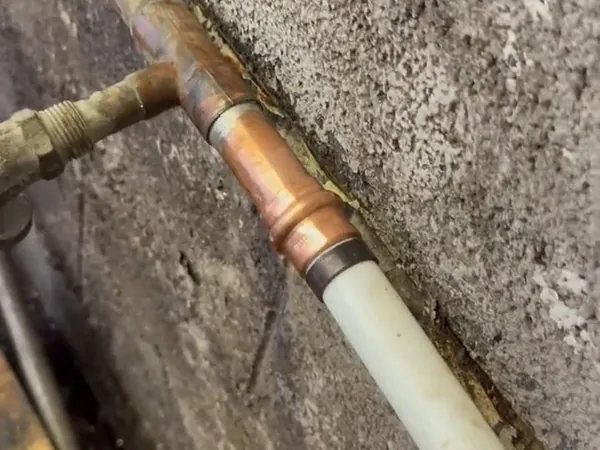
Repiping in Lakewood requires knowing which decade a specific section of the house was built. The 1950 to 1953 core of the Lakewood Park Corporation build primarily used galvanized steel supply. Homes finished in the late 1950s and early 1960s frequently have early-era copper now showing pinhole failures from decades of groundwater chemistry and use. Many properties along the Lakewood Boulevard and Del Amo Boulevard corridors carry mixed systems: galvanized service laterals from the street, copper interior runs, and subsequent repair sections in CPVC or PEX. A proper mass-tract repipe assessment identifies every pipe material in the home before recommending an approach: galvanized-to-PEX, copper-to-PEX, slab rerouting through the attic, or manifold-based partial repipe.

Learn about mass-tract repiping →

Slab Leak Detection in Post-WWII Construction

Lakewood’s 1950s construction put supply lines under the slab for the same reason it used assembly-line framing: speed and efficiency at scale. The pipes installed during those builds are now past their design life at the slab interface. Hot spots on the floor, higher-than-usual water bills, and the faint sound of running water with every fixture off are the most common homeowner reports. The Central Groundwater Basin water chemistry adds a corrosion factor affecting both galvanized and copper at the slab. We use acoustic listening devices, thermal imaging, and electronic leak detection to locate the failure point before any concrete is opened, then recommend the most cost-effective repair approach for the specific location.

Learn about slab leak detection →

Cast Iron Drain Stack Service at 70+ Years

The cast iron used in Lakewood’s 1950s construction has a finite service life. Hydrogen sulfide exposure produces microbially induced corrosion from the inside out. Horizontal runs under the slab accumulate soil loading. The mature jacaranda and magnolia trees on Lakewood’s residential streets send root systems into clay sewer laterals installed before 1965. Symptoms typically build gradually: a kitchen sink that clears with snaking but returns in weeks, a bathroom that backs up without warning, or a gurgling toilet indicating mainline restriction. Camera inspection is the right diagnostic first step in any Lakewood home with original cast iron. We scope, clean what can be cleaned, and replace what has corroded beyond cost-effective maintenance.

Learn about drain and sewer service →

Plumbing Service Areas Across SE LA and the Gateway Cities

Adjacent Cities We Serve

We serve the full SE LA ring around Lakewood: Long Beach immediately to the south, Compton and Paramount to the west, Downey and Norwalk to the north, Cerritos and Artesia to the northeast, and Cypress, Hawaiian Gardens, and Signal Hill to the east. The 605 Freeway corridor and Del Amo Boulevard define the eastern reach of our primary service zone.

Lakewood Sub-Areas and Neighborhoods

Within Lakewood we serve all named neighborhoods and corridors. The city’s mass-tract layout means plumbing issues cluster by build year rather than by neighborhood name, but our geographic coverage runs from the Lakewood Mall Area near Lakewood Center to the residential sections near Mayfair Park, Rynerson Park, and Bolivar Park. Carson Park, the Lakewood Mutuals neighborhood, and the Lakewood Country Club area are all within our regular service zone.

Frequently Asked Plumbing Questions in Lakewood, CA

What types of plumbing problems are most common in Lakewood’s 1950s tract homes?

The three most common are: galvanized or early-copper supply line failures (low water pressure, rust-tinted water, recurring fitting leaks); slab leaks signaled by warm floor spots, high water bills, and the faint sound of running water with all fixtures off; and slow drain or sewer backup from deteriorated cast iron stacks combined with clay lateral root intrusion. Lakewood’s 1950 to 1965 mass-tract construction creates a specific overlap of these issues in the same home.

How do I know if my Lakewood home needs a full repipe versus continued spot repairs?

If your home has galvanized supply lines and has had two or more leaks at different locations within two years, a whole-home repipe is almost always more cost-effective than continued spot repairs. The same reasoning applies to early-era copper with pinhole failures; pinholes rarely appear in only one place. A licensed plumber can assess the pipe material, age, and condition in your specific home and give you a written comparison of repair cost versus repipe cost over a realistic five-year period.

How much does slab leak repair cost in Lakewood, CA?

Cost depends on the detection method required, the leak location, and the repair approach. A spot repair through the slab typically ranges from $1,500 to $4,500. A pipe reroute through walls or the attic to bypass the failed slab section ranges from $2,500 to $8,000 depending on run length. Homes with multiple slab failures may need full repiping, which for a standard Lakewood 3-bedroom tract home typically runs $7,000 to $18,000. We provide written estimates before any work begins.

Does Lakewood Plumbing Pros provide 24/7 emergency plumbing service?

Yes. We provide 24-hour emergency plumbing response in Lakewood and the adjacent SE LA cities, seven days a week. Burst galvanized supply lines, active slab leaks, sewer backups, and water heater failures are all handled on an emergency basis. Call (855) 575-2890 at any hour.

What is Lakewood’s water source, and how does it affect plumbing in older homes?

The City of Lakewood’s drinking water comes exclusively from deep wells the city operates within the Central Groundwater Basin — not from imported Metropolitan Water District supply. The groundwater chemistry in this basin, combined with the age of the original 1950s-era supply lines, contributes to the corrosion patterns visible in both galvanized and early-copper systems across the city. The City of Lakewood Water Resources Department publishes an annual water quality report.

Need a Plumber in Lakewood, CA? Call Now.

Licensed and insured plumbing for Lakewood’s 1950s mass-tract homes and the surrounding SE LA Gateway Cities. Free estimates. Upfront pricing. 24/7 emergency response for Lakewood and all adjacent cities.

Call (855) 575-2890

For Lakewood homeowners researching aging pipe systems, our guides on what pipes are in Lakewood homes and our annual plumbing checklist are practical starting points.